In a PF boiler system, coal is pulverised to typically 70–75%, passing 75 micron and entrained in
preheated primary air for conveying to the burners. In some small-scale operations indirect firingis
used, this is when the pulverised coal is stored in a bin before feeding to the burners. Normally,
Hardgrove Grindability Index (HGI) is used to predict
mill performance.The three types of coal pulveriser are generally identified by the speed of their rotation:
- Low speed mills are of the ball/tube design with a large steel cylinder and a charge of
hardened balls. Coal is ground as it is crushed and abraded between the balls.
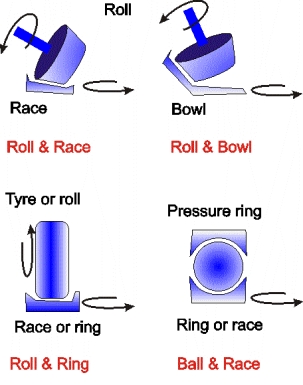
- Medium speed pulverisers are typically vertical spindle mills that grind the coal between
rollers or balls and a bowl or race.
- High speed mills have a high-speed rotor, which impacts on and breaks the coal.
The table below shows the preferred coal properties for each type of pulveriser.
|
Pulveriser Type
|
Low
speed
|
Medium
speed
|
High
speed
|
|
Example
|
Tube
mill
|
Vertical
spindle
mill
|
Impact
mill
|
|
Coal feed top size
|
mm
|
25
|
40
|
32
|
|
Coal moisture
|
(as) %
|
0–10
|
0–20
|
0–25
|
|
Coal ash
|
(as) %
|
1–50
|
1–30
|
1–15
|
|
Coal quartz
content
|
(as) %
|
0–10
|
0–3
|
0–1
|
|
Hardgrove
Grindability Index
|
|
30–50
80–100
|
40–60
|
60–100
|
|
Abrasion index
|
mg/kg
|
50–100
|
10–60
|
5–30
|
Vertical spindle mills are commonly used in large-scale power plants and to pulverise coal for
injection into blast furnaces and can have different configurations as shown below.